AI vs. Human: How We Built an "Impossible" Campaign Together
AI vs. Human: How We Combined Both to Create the Perfect Campaign
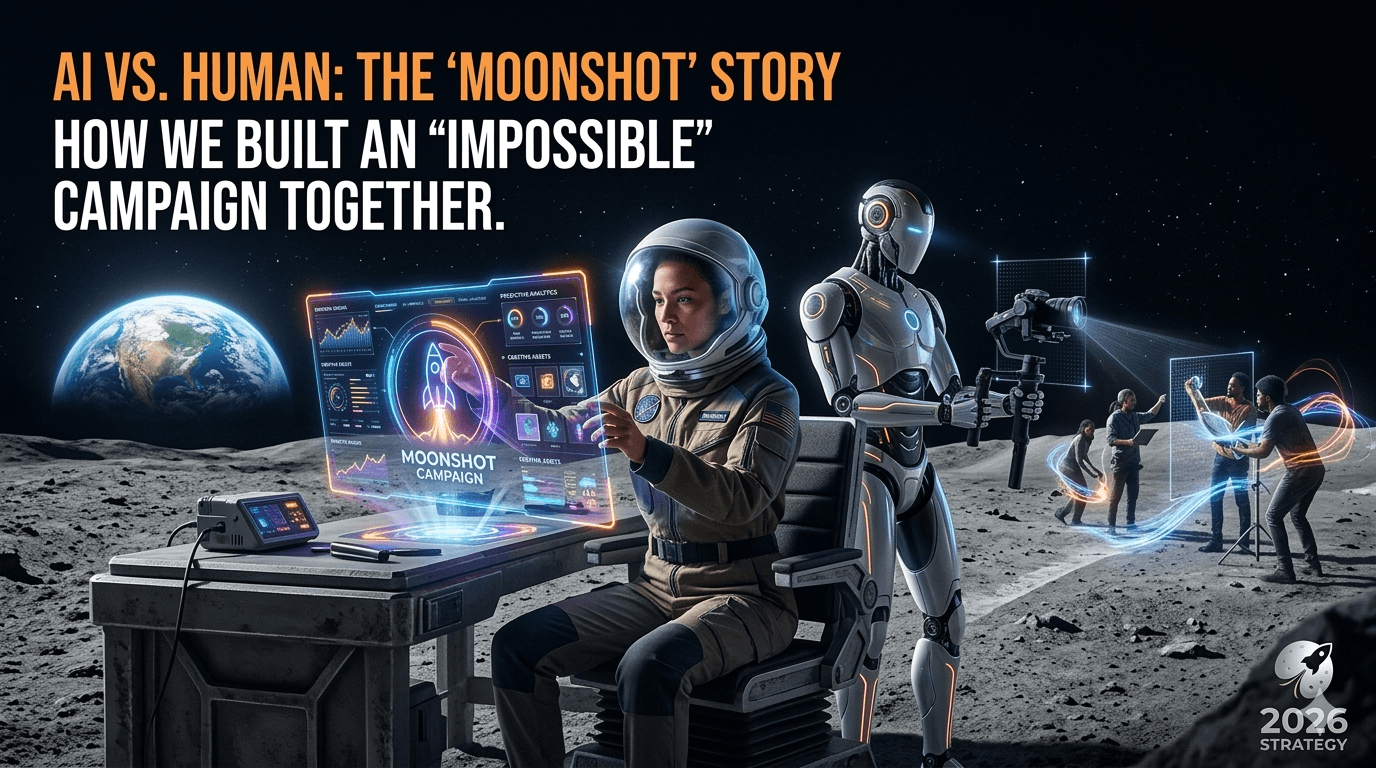
In the rapidly evolving digital landscape of 2026, the debate is no longer about AI vs. Human capabilities. Instead, the focus has shifted toward how these two forces can collaborate to produce something greater than the sum of their parts. While artificial intelligence provides unparalleled speed and data processing, the human touch provides the empathy and nuance required to truly connect with an audience.
In this article, we explore how combining human intuition with machine efficiency allows brands to build campaigns that are both data-driven and deeply resonant.
What is the best way to combine AI and Human efforts in marketing?
The most effective "AI vs. Human" strategy involves using AI for data analysis, initial drafting, and pattern recognition, while humans handle emotional storytelling, ethical oversight, and final creative polish. This hybrid approach ensures efficiency without sacrificing the authentic brand voice that builds consumer trust.
The Strengths of AI: Efficiency and Scale
Artificial Intelligence has transformed the "heavy lifting" phase of marketing. By processing millions of data points in seconds, AI identifies trends that would take a human team weeks to uncover.
AI excels at predictive analytics, allowing marketers to forecast consumer behavior with high accuracy. It can also generate thousands of personalized ad variations, ensuring that the right message reaches the right person at the optimal time.
The Human Element: Empathy and Ethics
While AI is a powerful tool, it lacks a fundamental understanding of the human experience. Humans bring "emotional intelligence" to the table—the ability to understand cultural nuances, sarcasm, and deep-seated emotional triggers.
Furthermore, humans provide the ethical guardrails necessary for modern branding. From ensuring diversity and inclusion to maintaining a consistent brand "soul," the human eye prevents campaigns from feeling robotic or tone-deaf.
How to Build a Hybrid Campaign Framework
To successfully navigate the AI vs. Human dynamic, we recommend a three-phase framework that leverages the best of both worlds.
Phase 1: Research and Data (AI-Led)
Start by using generative AI and data modeling tools to audit your current market position. AI can quickly summarize competitor strategies and identify "content gaps" in your niche.
Phase 2: Creative Concepting (Human-Led)
Once you have the data, let the humans take over. Use a brainstorming session to turn those data points into a relatable story. A machine might know that "users want reliability," but a human knows how to tell a story about a father relying on a product to keep his family safe.
Phase 3: Content Production and Refinement (Hybrid)
In this stage, AI can generate first drafts, social media captions, or image assets. Humans then step in as "editors-in-chief" to refine the tone, check for factual accuracy, and ensure the content aligns with the overall brand strategy.
Comparing AI vs. Human Contributions
| Task Category | AI Responsibility | Human Responsibility |
|---|---|---|
| Strategy | Trend analysis & Keyword research | Goal setting & Brand positioning |
| Content | Draft generation & Translation | Storytelling & Emotional hooks |
| Design | Layout variations & Image scaling | Creative direction & Aesthetic feel |
| Analytics | Real-time reporting & A/B testing | Insight interpretation & Pivoting |
Practical Steps for Implementation
- Define Your Toolstack: Identify which AI tools (like Gemini or specialized marketing software) will handle the data-heavy tasks.
- Train Your Team: Ensure your creative team knows how to "prompt" AI effectively to get the best raw material.
- Establish a Review Loop: Never publish AI-generated content without a human review to maintain quality and authority.
- Monitor Sentiment: Use AI to track how people feel about the campaign, but let humans decide how to respond to sensitive feedback.
Frequently Asked Questions
Can AI replace human copywriters in 2026?
While AI can generate high volumes of text, it cannot replace the strategic thinking and emotional depth of a professional copywriter. AI is a co-pilot that handles repetitive drafting, allowing writers to focus on high-level strategy and unique brand voice.
How does AI vs. Human collaboration improve SEO?
AI helps identify high-intent keywords and technical optimizations quickly. Humans ensure the content satisfies "E-E-A-T" (Experience, Expertise, Authoritativeness, and Trustworthiness), which is a critical ranking factor for search engines like Google.
Is AI-generated content penalized by search engines?
Google’s guidelines state that content is rewarded based on its helpfulness and quality, regardless of how it was produced. However, "spammy" AI content intended solely to manipulate search rankings is penalized. Human oversight ensures your content remains "helpful" and "people-first."
What is the biggest risk in the AI vs. Human approach?
The biggest risk is over-reliance on technology. If a brand loses its human touch, it risks becoming generic. Authenticity is the most valuable currency in 2026, and only humans can consistently provide that.
Conclusion: Finding the Perfect Balance
Success in modern marketing isn't about choosing AI vs. Human; it is about building a bridge between them. By delegating data-heavy tasks to machines and creative, emotional tasks to people, you create a campaign that is both efficient and profoundly impactful.
Start small by integrating AI into your research phase, and always keep a human at the helm to steer your brand toward authentic connections.
Work with Art Drawn Studio