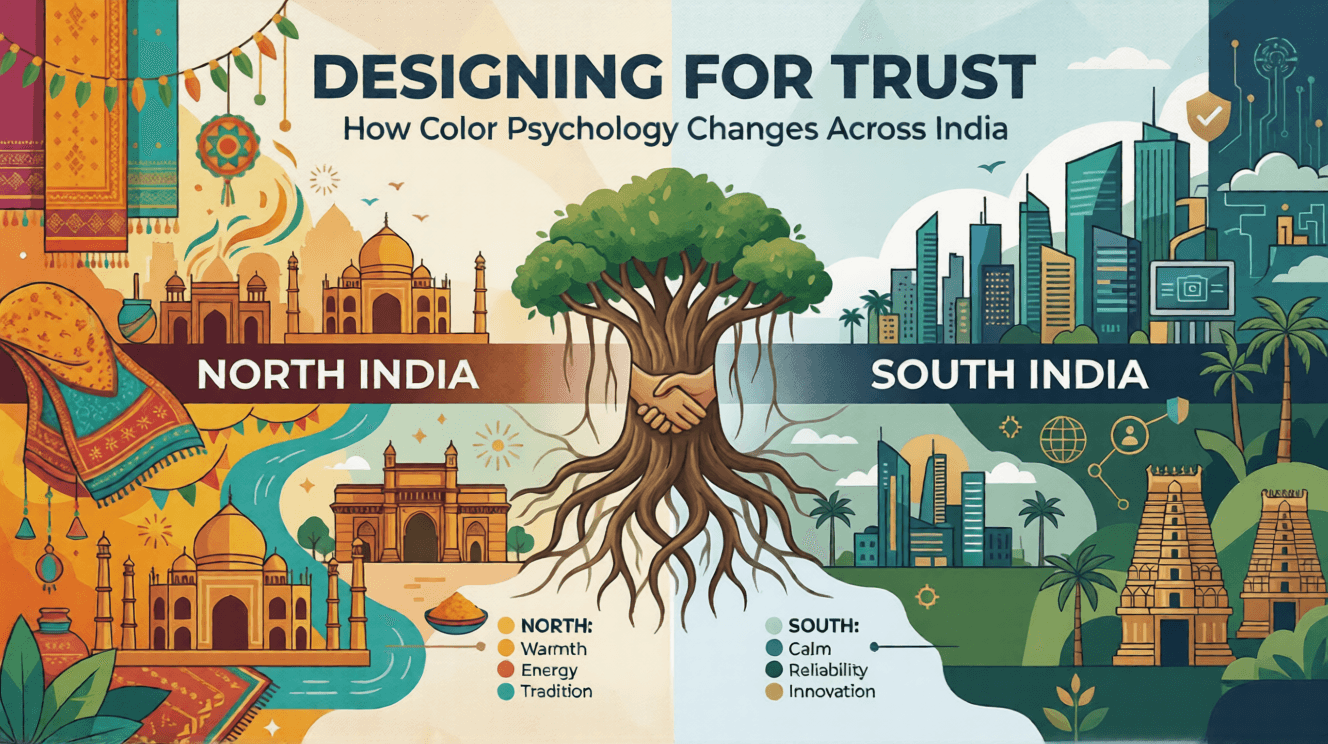
Color Psychology in India: Designing for Trust in North and South
Designing for Trust: Navigating Color Psychology in India
India is not a monolith; it is a vibrant tapestry of cultures, languages, and traditions. For digital marketers and UI/UX designers, understanding this diversity is crucial when expanding into the subcontinent. One of the most powerful, yet often overlooked, tools for building localized connections is color psychology in India. The way a user in Delhi perceives a specific hue can differ significantly from how a user in Chennai interprets it. By mastering these regional nuances, brands can design digital experiences that inherently foster trust and drive engagement.
What is Cultural Color Psychology in Design?
Cultural color psychology is the study of how different societies and cultures interpret colors. In design, it involves using specific palettes to evoke desired emotional responses, align with local traditions, and establish subconscious trust with the target demographic.
The Impact of Color Psychology in India on User Trust
Trust is the foundation of any successful digital product, especially in e-commerce, fintech, and healthcare. In Western markets, blue is universally accepted as the color of trust and corporate reliability. While blue works well globally, the application of color psychology in India demands a more nuanced approach. Colors here are deeply tied to religion, festivals, and historical contexts. Using a culturally inappropriate color can alienate users, while the right palette can make a brand feel native, safe, and reliable.
Designing for North India: Vibrancy and Tradition
North India is characterized by its bold traditions, grand festivals, and vibrant aesthetic. Design elements targeting this region often benefit from high-contrast, energetic palettes.
Auspicious Reds and Saffrons
In North Indian culture, red is incredibly auspicious. It is the color of weddings, prosperity, and celebration. Brands looking to evoke excitement or indicate a festive sale often lean heavily into red. Saffron (or deep orange) holds profound spiritual significance, representing purity and religious devotion.
Gold as a Trust Marker
Gold is universally loved across India, but in the North, it is often paired with reds and maroons to signify luxury, premium quality, and enduring value. For fintech apps or high-end retail targeting North Indian consumers, subtle gold accents can elevate perceived brand value.
Designing for South India: Subtlety, Nature, and Intellect
South Indian aesthetics often lean towards more subdued, earthy, and intellectually grounded tones. The tropical geography and deep-rooted classical traditions heavily influence visual preferences.
Earthy Greens and Calming Blues
Green is highly regarded in South India, symbolizing nature, agricultural prosperity, and tranquility. It is deeply connected to the lush landscapes of states like Kerala and Karnataka. Blue is also highly effective here, resonating with a demographic that highly values education, technology, and stability.
Yellow and Auspicious Beginnings
While red is dominant in the North, yellow often takes precedence in South Indian cultural rituals. It is associated with turmeric, purity, and new beginnings. Using warm yellows can make an interface feel welcoming and culturally attuned to a Southern audience.
Bridging the Divide: Best Practices for UI/UX Design India
When building a national product, balancing these regional preferences is key. Here are strategic steps to implement regional color variations:
- Establish a Neutral Base: Use clean, neutral backgrounds (whites, light grays) to allow your accent colors to stand out without overwhelming the user.
- Dynamic Theming: If feasible, use location-based dynamic theming. An app could subtly shift its promotional banners to feature warmer, brighter tones in the North and cooler, grounded tones in the South.
- A/B Testing by Region: Never assume. Run split tests on your landing pages, segmenting traffic by geography to see which color palettes yield higher conversion rates.
- Context over Stereotype: Ensure colors match the industry. A hospital app in Punjab should still prioritize clean blues and whites for hygiene, rather than relying solely on cultural reds.
| Region | Primary Emotional Drivers | Recommended Accent Colors | Avoid or Use Sparingly |
|---|---|---|---|
| North India | Celebration, Passion, Luxury | Red, Saffron, Gold | Drab grays, overly muted pastels |
| South India | Tranquility, Tradition, Intellect | Green, Blue, Warm Yellow | Aggressive neons, excessive black |
Frequently Asked Questions
Does color meaning change across different Indian states?
Yes. Because India has diverse languages and religious majorities across its states, the historical and cultural associations with colors vary. What signifies mourning in one community might represent peace in another.
What is the best color for building trust in India?
While culturally nuanced colors are important for marketing, universally, shades of blue and green remain the safest baseline for building functional trust in digital interfaces, particularly for banking and healthcare apps.
Should my brand use different colors for North and South India?
It depends on your scale and product architecture. While entirely different brand colors might dilute your identity, using localized color palettes for regional marketing campaigns, banners, and localized landing pages is highly recommended.
How does color impact e-commerce conversions in India?
Color significantly impacts conversions by influencing the perceived urgency and trustworthiness of an offer. For example, festive sales during Diwali perform exceptionally well when utilizing reds, golds, and bright oranges to match the cultural mood.
Conclusion
Successfully penetrating the Indian market requires moving beyond a one-size-fits-all design philosophy. By understanding and applying the principles of color psychology in India, designers and brands can create digital spaces that resonate on a deeper, cultural level. Whether you are leaning into the vibrant, festive tones preferred in the North, or the grounded, natural hues favored in the South, designing for trust starts with speaking the user's visual language.
Work with Art Drawn Studio