Is Your Product Winning? The Indian Supermarket Packaging Guide
Passing the 'Shelf Test': Does Your Packaging Survive the Chaos of an Indian Supermarket?
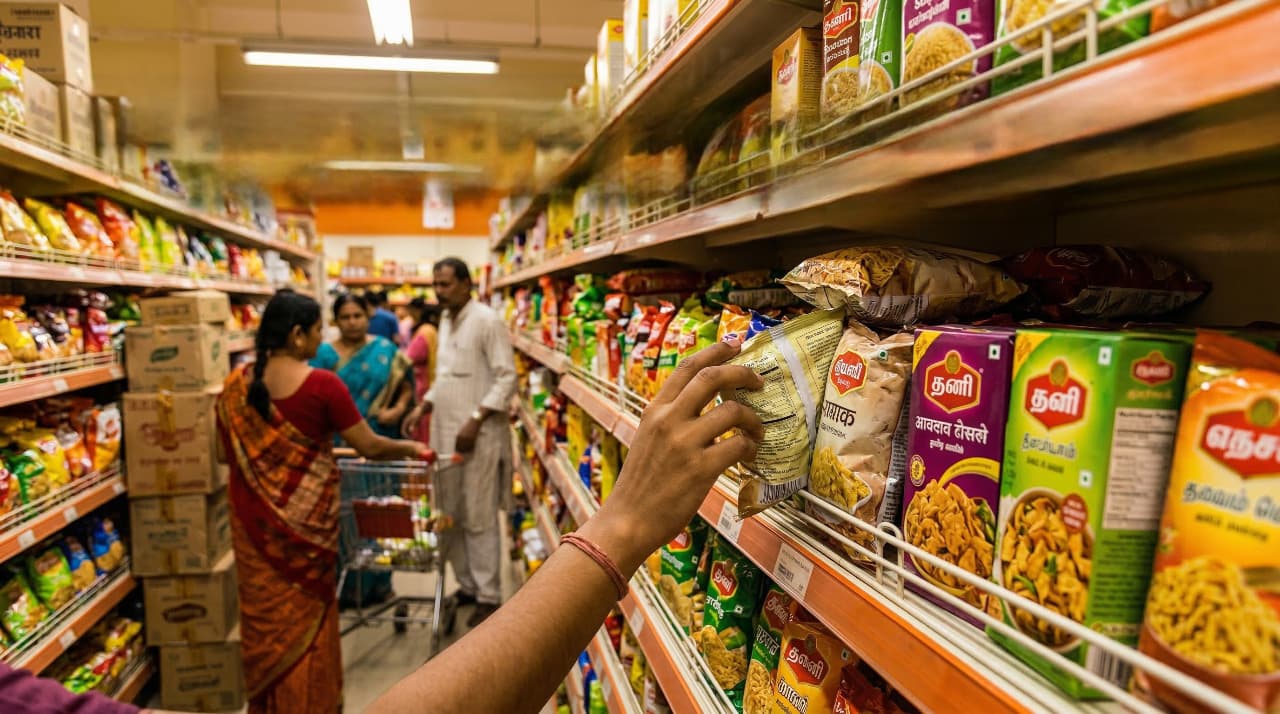
The Indian retail landscape is unlike any other in the world. From the organized aisles of modern hypermarkets to the "organized chaos" of local kirana stores, your product faces a brutal environment. To succeed, your Indian supermarket packaging must do more than just look good—it must survive the "Shelf Test."
The shelf test is the moment of truth where a consumer’s eye scans a sea of competing brands. In less than three seconds, your packaging must communicate value, build trust, and trigger a purchase decision. If your design is too subtle, it gets lost; if it is too flimsy, it arrives damaged.
What is the 'Shelf Test' in Retail?
The 'Shelf Test' is a diagnostic evaluation of how a product's packaging performs in a real-world retail environment. It measures visual standout (pop), messaging clarity from a distance, and physical resilience against heavy handling by staff and customers.
The Unique Challenges of Indian Retail Shelves
To design effective Indian supermarket packaging, you must first understand the environment. Indian supermarkets are often characterized by high footfall, varying lighting conditions, and a "touch-and-feel" consumer culture.
1. The Battle for Visual Real Estate
In India, "more is more." While Western designs often lean toward minimalism, Indian shelves are a riot of color. Your packaging needs to find the "sweet spot" between professional aesthetics and the vibrant visibility required to break through the noise.
2. The "Touch and Feel" Factor
Indian consumers are tactile. They will pick up a pack, turn it around, and check the weight or the seal. If the lamination peels or the cardboard feels cheap, the perceived value of the product drops instantly, regardless of the quality inside.
3. Vertical vs. Horizontal Visibility
Depending on the store format, your product might be stacked vertically or laid flat. Does your branding work if only the top "lip" of the box is visible? Top-tier Indian supermarket packaging accounts for every possible stacking angle.
Key Elements of Packaging That Passes the Test
| Feature | Requirement for Indian Market | Why it Matters |
|---|---|---|
| Color Contrast | High-contrast palettes | Ensures visibility under poor overhead lighting. |
| Typography | Bold, legible fonts | Consumers must read the brand name from 4 feet away. |
| Durability | High GSM paper or reinforced plastic | Survives rough transit and multiple "pick-ups." |
| Information | Multi-lingual or iconography | Caters to a diverse, multilingual demographic. |
Designing for the 3-Second Rule
You have three seconds to grab attention. To optimize your Indian supermarket packaging, focus on a "Visual Hierarchy."
- The Hero: The brand name or the product image should be the largest element.
- The Hook: A clear benefit (e.g., "100% Organic" or "Removes Tough Stains").
- The Proof: Certifications (FSSAI, ISI) or quantity markers that build immediate trust.
The Role of Sustainability in Modern Indian Retail
As of 2026, Indian consumers are increasingly conscious of plastic waste. However, sustainability cannot come at the cost of durability. Brands that use compostable materials which still withstand the humidity of an Indian summer are winning the long-term shelf game.
Practical Steps to Improve Your Shelf Presence:
- Conduct a "Shadow Shop": Place your prototype on a real supermarket shelf next to competitors and take photos from 5, 10, and 15 feet away.
- Stress Test the Material: Simulate the heat and humidity of a Mumbai warehouse or a Delhi summer to ensure the adhesive holds up.
- Simplify the Messaging: If a customer has to squint to see what the product is, you have already lost the sale.
Frequently Asked Questions
Why is color choice so important for Indian supermarket packaging?
In India, colors carry deep cultural and emotional significance. Beyond psychology, high-contrast colors are essential because many retail outlets do not have standardized professional lighting. Bright yellows, reds, and deep blues tend to perform better in low-light "mom-and-pop" stores compared to pastels.
How does packaging durability affect brand trust?
If a package looks dented, dusty, or torn on the shelf, consumers subconsciously associate that "damage" with the product inside. In the FMCG sector, a compromised package suggests a lack of hygiene or quality control, leading the customer to reach for a "fresher" looking competitor.
Should I use regional languages on my packaging?
While English and Hindi are standard, including regional languages can significantly boost trust in specific states. For national brands, using clear, universal icons (like the veg/non-veg green/brown dot) is often more effective than cluttering the space with multiple languages.
What is the biggest mistake brands make with retail packaging?
The most common mistake is "Design Overload." Brands try to put too much information on the front of the pack. This creates visual clutter, making it impossible for the consumer to identify the brand or the primary benefit quickly during the 3-second shelf test.
Conclusion
Surviving the chaos of the aisles requires a blend of art and engineering. Your Indian supermarket packaging must be bold enough to be seen, clear enough to be understood, and tough enough to be handled. By prioritizing the "Shelf Test" during your design phase, you ensure that your product doesn't just sit on the shelf—it moves off it.
Would you like a custom audit of your current packaging design to see where it stands?
Work with Art Drawn Studio