The Secret to Premium Boxes Without Expensive Dies
Luxury on a Budget: How to Design Premium Boxes Without Expensive Dies
In the world of e-commerce, the unboxing experience is often the first physical touchpoint a customer has with your brand. While every entrepreneur dreams of bespoke, intricate packaging, the high cost of custom tooling can be a major roadblock. However, it is entirely possible to create premium boxes without expensive dies by leveraging modern technology and clever design strategies. This guide explores how you can achieve a high-end look while keeping your overhead low.
How can you create premium boxes without expensive dies?
To design premium boxes without expensive dies, utilize digital die-cutting technology (like CNC or laser cutters) for short runs, or repurpose standard "stock" dielines that manufacturers already own. You can also elevate standard box shapes using high-end finishes like digital foiling, spot UV, and textured paper stocks.
The High Cost of Traditional Tooling
Traditionally, creating a custom-shaped box required a steel-rule die—a specialized tool made of wood and metal used to stamp out shapes. These dies can cost hundreds or even thousands of dollars depending on the complexity of the design.
For startups and small businesses, this upfront "tooling fee" often makes custom packaging inaccessible. By eliminating the need for these physical tools, you can pivot your budget toward higher-quality materials or marketing efforts.
Digital Die-Cutting: The Game Changer
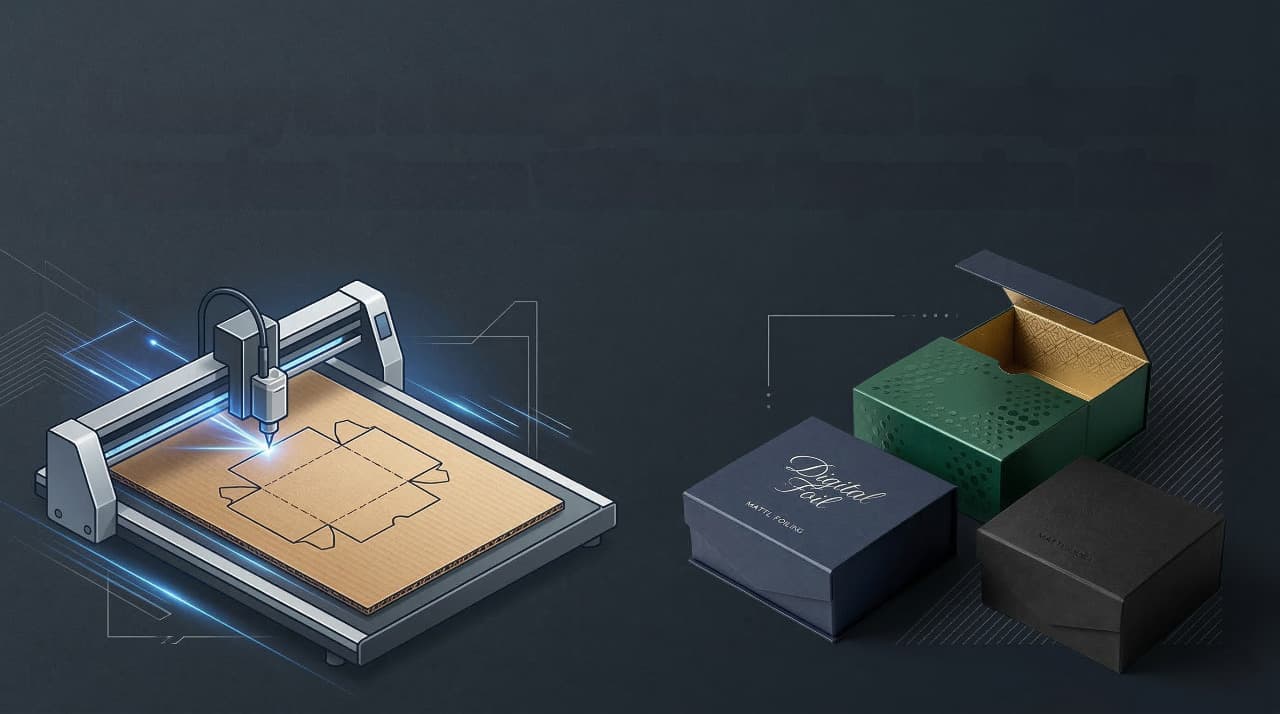
The most effective way to produce premium boxes without expensive dies is through digital die-cutting. Instead of a physical stamp, a computer-controlled blade or laser follows a digital path to cut and crease your packaging.
- No Tooling Fees: Since there is no physical die to manufacture, you save on upfront costs.
- Infinite Flexibility: You can tweak your design between batches without paying for a new tool.
- Prototyping: Digital cutting allows you to see a physical sample of your luxury box before committing to a larger run.
Using Stock Dielines to Your Advantage
Most packaging manufacturers have a library of "house dies." These are standard shapes—like mailer boxes, tuck-top boxes, or sleeve-and-tray styles—that they have already produced.
By choosing a stock dieline, you bypass the tooling fee entirely. The "premium" feel then comes from what you do with the surface of that standard shape. A basic rectangle becomes a luxury item when wrapped in soft-touch lamination or embossed with a minimalist logo.
Elevating Standard Shapes with Premium Finishes
If you aren't changing the shape of the box, you must change the sensory experience of the box. You can achieve a "boutique" feel by focusing on finishes that don't require structural changes.
| Feature | Impact on Brand Perception | Budget Friendliness |
|---|---|---|
| Soft-Touch Lamination | Provides a velvety, high-end feel. | Very High |
| Digital Gold Foil | Adds metallic shine without custom plates. | High |
| Custom Inserts | Keeps products secure and looks professional. | Medium |
| Textured Paper | Adds a tactile "organic" or "linen" quality. | High |
Smart Material Selection
The weight of the cardboard (measured in GSM or points) speaks volumes. A flimsy box feels cheap, regardless of the design. To ensure your packaging feels premium, opt for a heavier weight board or a rigid corrugated material with a "Kemi" finish (a smooth, clay-coated surface).
Step-By-Step: Designing Your Budget Luxury Box
- Define Your Dimensions: Measure your product and add a 2mm buffer for a snug fit.
- Select a Digital Vendor: Look for printers that offer "short-run digital packaging."
- Choose a Standard Shape: Pick a classic mailer or "matchbox" style to avoid custom tooling.
- Add a "Hero" Finish: Choose one high-end element, such as a foil logo or a custom-printed interior.
- Focus on the Interior: Sometimes, a plain exterior with a vibrant, branded interior creates a more memorable "reveal."
Frequently Asked Questions
Is digital die-cutting as precise as traditional dies?
Yes, modern digital cutting tables are incredibly precise, often within fractions of a millimeter. While traditional dies are faster for runs of 10,000+ units, digital cutting is the gold standard for precision in smaller, premium batches.
What is the best material for a luxury feel?
For a premium look, "Sulphate Chemical Pulp" (SBS) board is preferred for its brightness and smoothness. If you want something more rugged yet high-end, a matte-black "E-flute" corrugated box provides excellent structural integrity and a modern aesthetic.
Can I get gold foil without a custom die?
Absolutely. Digital foiling (also known as sleeking) allows you to apply metallic foil directly to a printed surface using heat and pressure, bypassing the need for expensive brass or copper foiling dies.
How do I find stock dielines?
Most major online packaging suppliers provide downloadable PDF or Illustrator templates for free. Using these ensures your design fits a standard manufacturing process, saving you time and money on engineering.
Conclusion
Creating premium boxes without expensive dies is about being "material-smart" rather than "tooling-heavy." By embracing digital cutting technology and focusing on tactile finishes like soft-touch coatings and digital foils, you can deliver a world-class unboxing experience without the heavy industrial price tag. Start with a standard shape, invest in high-quality paper, and let your brand's story do the heavy lifting.
Category:
- Packaging Design
- Cost-Effective Packaging
- Digital Die-Cutting
- Packaging Finishes
- E-commerce Packaging
Work with Art Drawn Studio